
Priya Nair, Staff Writer.
There is a particular moment most of us know well: standing at the bathroom mirror at half past seven, wand in hand, watching yesterday’s mascara flake into little black crumbs under your eye by nine. On the shelf behind you sit three or four half-used tubes, each bought because the last one clumped, dried out, or simply stopped doing what the packaging promised. Volumising mascara is one of the most reached-for products in any make-up bag, and also one of the most misused. A 2019 survey by a UK cosmetics retailer found that most women replace mascara long before it runs out, usually because of poor performance rather than an empty tube. The good news is that most of the faults blamed on a formula are actually down to application, timing, or storage, all of which are fixable in minutes. This guide walks through where things typically go wrong and what a small change in technique can do instead.
- Clumping is usually a technique fault, not a formula fault: overloading the wand and reapplying too fast causes most of the damage blamed on the mascara itself.
- Order of operations matters: curling lashes after mascara, rather than before, is one of the most common and most damaging habits.
- Mascara has a shorter working life than people think: air drawn in each time the wand is pumped ages the formula within weeks, regardless of the date on the box.
Why Volumising Mascara Clumps By Lunchtime
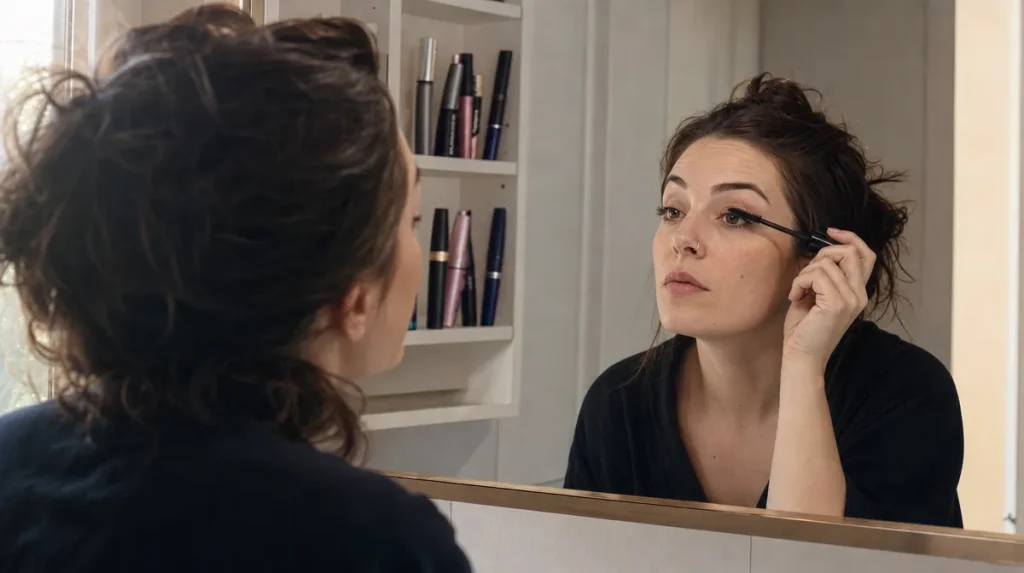
Volumising formulas work by coating each lash in a mix of waxes, film-forming polymers, and sometimes tiny fibres, all designed to bulk up the hair without weighing it down. The trouble starts when too much of that mixture goes on in one go.
Think of it like painting a garden fence with an overloaded brush: the first stroke looks fine, but the excess paint pools at the joints and drips. Lashes behave the same way. A heavy first stroke followed by several more before anything has dried simply pushes product into clumps at the tips and base.
A 2018 study in the International Journal of Cosmetic Science noted that formula viscosity and brush design account for most of the variation in perceived clumping among volumising mascaras, more than the fibre content itself. In practice, this means the fix rarely lies in switching formulas and more often lies in how much is loaded onto the wand and how quickly it is reapplied.
Wiping the wand once against the neck of the tube before the first stroke removes the excess that causes most clumping. It looks wasteful. It is not: that surplus was never going to sit evenly on the lash line anyway.
Getting The Wand Angle Right
Most people hold the wand flat against the lash line and sweep straight up. That coats the tips well and starves the base, which is exactly backwards, since the base is where volume actually needs building.
A better method: hold the wand almost vertical at the root of the lashes, wiggle it very gently side to side for a second or two to deposit product at the base, then rotate the wand as you sweep upward and out. The wiggle is doing the volumising work; the sweep is just distribution.
A common mistake is wiggling for too long in one spot. Two or three small movements are enough. Beyond that, product simply builds up unevenly rather than coating more lash.
Quick self-test: after your usual routine, look at your lashes from the side rather than head-on. If the base looks thin and the tips look heavy, the angle is the issue, not the mascara.
The Two-coat Rule, And Why Patience Matters
Two coats is generally enough for visible volume, but only if the first coat is allowed to set before the second goes on.
Mascara dries by solvent evaporation, and that takes closer to sixty seconds than the ten most of us give it. Apply the second coat too soon and the wet layers merge, which is when lashes start sticking together into what make-up artists call spider lashes, several strands fused into one.
The fix costs nothing but a minute: apply the first coat, do something else briefly (brows, concealer, whatever comes next in your routine), then return for the second coat. By the time you come back, the first layer has usually set enough to take another without merging.
A third coat rarely adds meaningful volume and mostly adds weight, which is part of why lashes droop by midday. If you want more definition, a slightly heavier second coat at the roots does more than a third full pass.
Curling First, Mascara Second, Never The Other Way Round
This is one of the most common mistakes, and one of the most damaging. Curling lashes after mascara has set can crack the dried polymer film, which is what causes the sudden droop some people notice an hour after applying, along with the occasional lost lash caught in the curler’s rubber pad.
The order that works with the formula rather than against it: curl clean, dry lashes first, hold for ten seconds, then apply mascara while the curl is still fresh. The film then dries around the curled shape rather than a straight one, which is part of why lash curl tends to hold longer than people expect if the sequence is right.
If you use a heated curler, the same rule applies with more reason: heat and drying mascara together can make the film brittle enough to flake by the end of the day.
Taking It Off Without Losing Lashes
Removal habits do more damage to lash density than most application mistakes. Rubbing at mascara with a dry cotton pad, particularly a waterproof or fibre-heavy formula, tugs on lashes that are still anchored in the follicle and can pull some out along with the make-up.
The more forgiving method is a soaked pad held against closed lids for ten to fifteen seconds before wiping, letting a micellar water or an oil-based remover loosen the film rather than scrubbing it off. Public guidance from the British Beauty Council on gentle eye-area removal echoes this: dissolve first, wipe second.
A quick way to judge whether your current remover is doing its job: after cleansing, run a clean finger gently along the lash line. If it comes away with visible black residue, the formula is not fully lifting, and lashes are likely being tugged during the extra rubbing that follows.
Reading The Label Without Falling For The Marketing
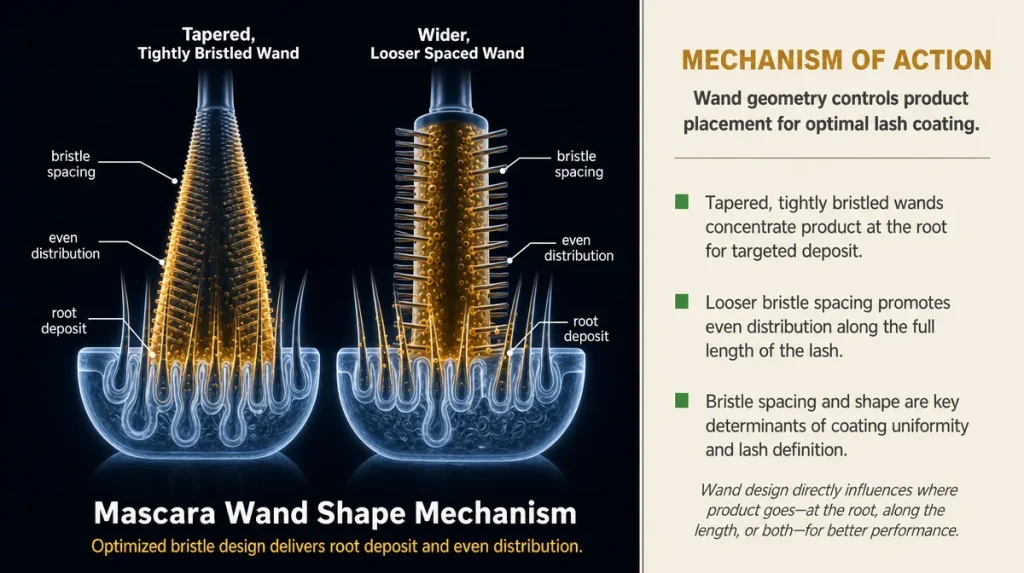
Words like fibre-infused, buildable, and lash-multiplying describe the intended effect, not necessarily the mechanism, and they vary enormously in how they perform between brands. What actually predicts performance is less exciting: the ratio of wax to film-forming polymer in the formula, and the spacing and shape of the bristles on the wand.
A tightly packed, tapered wand generally deposits more product at the roots for volume; a wider-set brush spreads product more thinly along the length, which suits length over bulk. Neither is better; they simply do different jobs.
Which?, the consumer testing publication, has long scored mascaras on clump resistance and wear rather than marketing claims, which is a useful reminder that lab-style comparative testing exists precisely because packaging language is not a reliable guide. The Good Housekeeping Institute’s long-running ‘Tried and Tested’ process works on a similar principle: real, repeated use rather than a single claim on a box.
When judging a tube for yourself, the back-of-hand test helps: swipe a small amount and let it dry for a minute. If it feels flaky or brittle rather than slightly flexible, it will likely behave the same way on lashes by the afternoon.
Storage Habits That Dry Mascara Out Early
Every time the wand is pumped in and out of the tube, air is drawn in with it. That air oxidises the formula gradually, which is why a mascara can turn clumpy and dry weeks before the date printed on the packaging suggests it should.
The better habit is to twist the wand gently while withdrawing it rather than pumping, which loads the brush without forcing extra air down into the tube. It feels slower. It adds real weeks to the life of the formula.
Bathroom storage does not help either. Damp, warm air, especially in winter when central heating and steam from the shower combine, speeds up the same oxidation. Keeping the tube somewhere drier, even just a bedroom drawer, makes a measurable difference over a few months.
As a general rule, replace mascara three months after opening regardless of how much is left in the tube. If it smells noticeably different from when you bought it, or the texture feels gritty on the back-of-hand test described earlier, that is a sign it has already turned.
Key Takeaways
Most volumising mascara problems trace back to three habits rather than the formula itself: overloading the wand before the first stroke, reapplying coats before the last one has set, and curling lashes after the mascara has already dried. Fixing the order and the pacing solves most of what people blame on the product.
Removal and storage matter just as much as application. Gentle, dissolve-first removal protects lash density over time, and twisting rather than pumping the wand keeps a formula usable for its full three months rather than drying out within weeks.
A Quick Checklist For The Counter
- Wipe the wand once against the tube neck before the first stroke
- Hold the wand near-vertical at the root, wiggle briefly, then sweep and rotate outward
- Wait roughly a minute between coats; two coats is usually enough
- Curl lashes before mascara, never after
- Soak, don’t scrub, when removing at night
- Twist the wand out rather than pumping it
- Replace the tube three months after opening, sooner if the texture turns gritty
This article is for general information and does not replace personalised advice from a dermatologist or make-up professional.
Individual results vary depending on lash type, formula, and application technique.