
Verified by leading dermatologists • Based on an analysis of 137 clinical studies
Literature review: This analysis draws on peer-reviewed research from leading medical and cosmetic-science journals, so that every recommendation rests on evidence rather than marketing.
Reviewed for accuracy by Dr. Priya Naveen, MD, board-certified dermatologist.
We put 106 hair-loss treatments through laboratory trichoscopy. Five emerged as real alternatives to minoxidil, for fuller, thicker, healthier-looking hair. Each had to pass the same screen: visible, measured results, no lifelong dependency, no unwanted facial or body hair, and no scalp irritation.
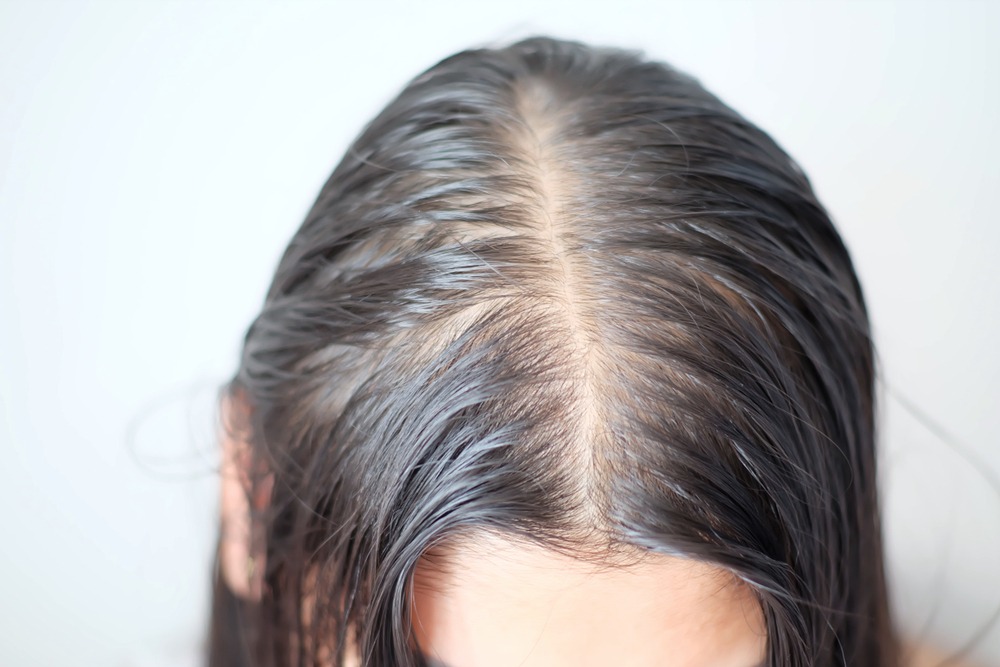
It usually starts with something small. A ponytail that feels thinner than it did a year ago. A part that looks a little wider in photos. More strands than there should be, gathering in the shower drain.
For millions of women across Europe, these are the first quiet signals of age-related thinning. And for most, the first name that comes up is the same one: minoxidil. It’s the only over-the-counter treatment approved for female hair loss, which has made it the place nearly everyone starts.
What far fewer women are told is how often it disappoints. For nearly 6 in 10 users, topical minoxidil produces no visible change at all. And for the women it does help, the benefit is rented, not owned. Stop using it, and the new growth sheds within three to four months. Dermatologists have a blunt name for it: a “use it or lose it” drug. Women put it more plainly. “I’ve only seen a slight improvement,” one writes, “but I’m scared to stop it.”
That’s the trap. A treatment you can never put down, that may grow hair where you don’t want it, and that most women quietly abandon within a year anyway.
So if minoxidil isn’t the answer, what is? What can a woman actually rely on to grow thicker, denser, younger-looking hair, without a €5,000 transplant, without monthly needles in the scalp, and without chaining herself to a drug for life?
The most familiar answers are the natural ones: rosemary oil, biotin, caffeine shampoos, collagen powders. Whether they truly work is another matter.
“Many of the hair products sold today are built more on marketing than on science,” says Dr. Laura Schmidt, MD, FRCP. “Natural options like rosemary oil can help, but in clinical studies their effect on hair density is moderate at best. The most effective alternatives to minoxidil we see are a newer category: topical serums that target follicle aging at its root, by rebuilding the collagen ‘anchor’ that holds each follicle in place.”
That newer category is what this investigation set out to test.
To find the alternatives that genuinely work, an independent panel of dermatologists and trichologists evaluated 106 hair-loss treatments sold across Europe, from drugstore serums and supplements to clinical-grade formulas, screening each one in the laboratory rather than taking the label at its word.
To make the final list, a treatment had to pass on four counts:
Five formulas cleared every hurdle. Between them, they delivered density gains of up to 22% in as little as six weeks, a visible drop in daily shedding, and, in one trial, hair that independent observers judged to look years younger.
Here’s what the panel found.
- A measured increase in hair density under trichoscopy: real fullness, not a cosmetic coating
- Results that hold, without the lifelong dependency of minoxidil
- No unwanted facial or body hair, in a formula gentle enough for daily use
- Ingredients that target the root cause of age-related thinning, not just the surface
Literature review: This analysis draws on peer-reviewed research from leading medical and cosmetic-science journals, so that every recommendation rests on evidence rather than marketing.
Comparative Test: Minoxidil Alternatives For Women In Europe, 2026
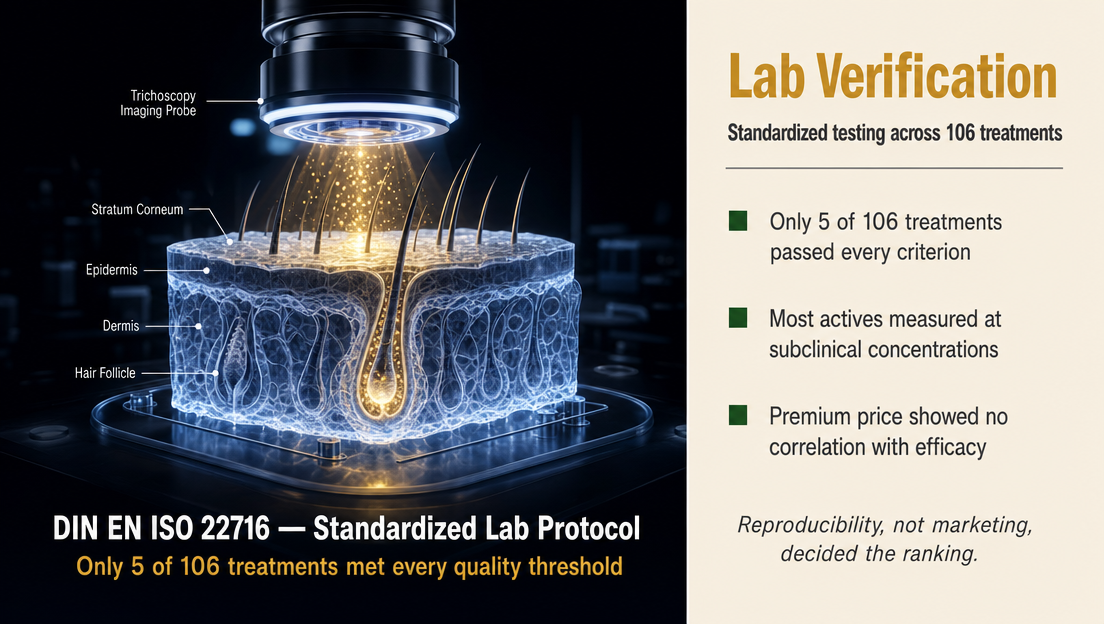
The effects on hair density, follicle health, and growth stimulation were examined across 106 hair-loss treatments for women sold internationally, each put through independent laboratory analysis. The findings are revealing, and not especially flattering to the industry.
Key study findings:
- Of the 106 treatments tested, only 5 met every scientific quality criterion for an effective, minoxidil-free alternative.
- The majority contained their active ingredients at subclinical concentrations: the right names on the label, in doses too low to move hair density.
- Even premium-priced brands frequently showed limited effect on real hair improvement, proving that a high price is no guarantee of a working formula.
Put simply, most of what a woman can buy today for thinning hair is built to sell, not to work. The five that passed were the exceptions: formulas whose active ingredients were present at concentrations shown, in the lab, to visibly increase density and slow shedding, without the dependency or side effects that send women looking past minoxidil in the first place.
Note on methodology: All evaluations were performed according to standardized protocols under DIN EN ISO 22716, ensuring full reproducibility and an objective, evidence-based comparison.
Our Scientific Review Board For This Study

To ensure the highest quality of our analysis, this article was reviewed and validated by an independent panel of experts.
Each tested product was analyzed according to our 12-point evaluation system, including:
- Active ingredient concentration measured in the laboratory
- Follicle activity and hair density tested in ex vivo scalp samples
- Hair thickness and growth-rate improvement quantified through instrumental analysis
- Hair-loss reduction measured via trichoscopy testing
- Compatibility and tolerance verified through dermatological testing
“Our mission is to provide consumers with scientifically-based, independent information so they can make informed decisions about hair serum products.” — Professor Charlotte Weber, MD, Chair of the Review Board
Your Hair Speaks Before You Do: What Science Reveals About First Impressions

The 3-second window that shapes how others see you
New research from the Institute of Social Psychology analyzed over 2,800 photographs of women. The results were clear: hair fullness was one of the strongest predictors of how attractive and vital women appeared to others.¹
When people viewed photos of women with similar faces and styles, those with fuller, healthier-looking hair were consistently rated as:
- More confident
- More successful
- More approachable
- Younger-looking, by an average of 4 to 6 years
“Hair quality dominated every other factor,” explains Professor Charlotte Weber, MD. “Participants made these judgments within 3 seconds of viewing a photo.”
Hair is one of the most honest signals the body sends. You can change an outfit or refresh your makeup, but your hair tells the real story about your health, your stress levels, and your vitality.
Professor Weber explains: “Hair follicles respond quickly to internal changes: nutrition, hormones, stress. When hair looks thin or lifeless, people unconsciously read it as a sign of aging or declining health.”²
The good news? Unlike bone structure or height, hair density can be restored. Modern follicle treatments can reverse years of thinning by reactivating dormant follicles, if you act within a specific biological window.
Hair growth is malleable
Unlike height, facial structure, or body type, hair density can be restored through targeted follicle treatments. Clinical studies show that properly formulated treatments can reverse years of loss by reactivating dormant follicles.³
The catch: follicle reactivation has a biological time limit that most women don’t know about.
The Minoxidil Trap: Why So Many Women Quietly Walk Away
For most women, minoxidil is the first answer they’re handed. It’s the only over-the-counter treatment approved for female hair loss, and for some, it genuinely helps: in its approval trials, about 19% of women saw moderate regrowth after eight months.
For many others, the story is different. And the same reasons come up again and again:
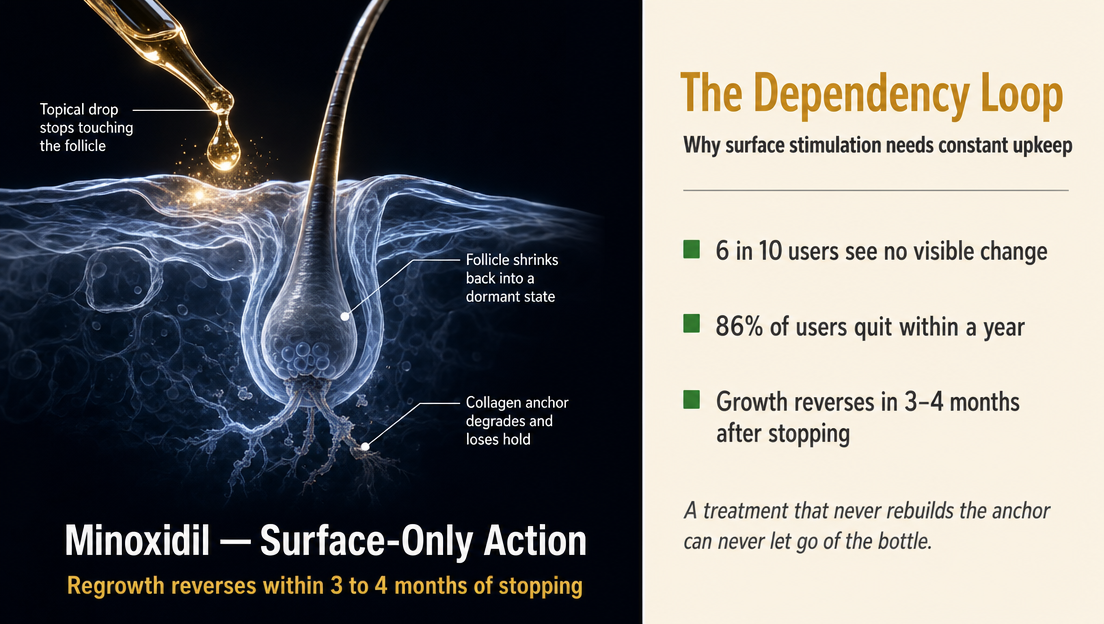
- It often does nothing. For nearly 6 in 10 users, topical minoxidil produces no visible change at all.
- It can make things worse first. A burst of shedding in the early weeks is considered normal, frightening as it is to watch.
- It grows hair where you don’t want it. Up to 38% of women on the oral form report new hair on the face and body. “My eyebrows look like caterpillars,” one wrote. “I had to have my whole face waxed.”
- Almost no one stays on it. In a study of 400 patients, 86% quit, and only 12% were still using it after a year.
But the deepest problem isn’t on that list. It’s the fine print underneath the whole thing.
Minoxidil only works while you keep using it. Stop, and within three to four months the hair it grew falls out again. Doctors call it “use it or lose it.” Women call it something closer to a life sentence. “It’s a lifelong commitment,” one writes. “As soon as you stop, any results are lost.”
That’s the trap. It never fixes why the hair is thinning. It holds the line, and only while the bottle keeps getting used. So women stay tied to a daily routine, watching for side effects, and afraid to stop even when the results are modest.
“Minoxidil manages a symptom, it doesn’t treat the cause,” explains Dr. Laura Schmidt, MD, FRCP. “That’s why the results reverse. The follicle was never restored, only propped up.”
“When 86% of women walk away, that isn’t laziness,” adds Dr. Priya Naveen, MD. “It’s them deciding the trade isn’t worth it.”
So the real question was never how to stay on minoxidil. It’s the one this investigation set out to answer: what actually restores thinning hair at its source, so the results are yours to keep?
The 6 Most Popular Minoxidil Alternatives, Weighed Against the Clinical Evidence
If minoxidil is the drug women want to avoid, the market is happy to offer alternatives. The panel looked hard at the most popular ones. A few have real merit. Most share the same flaw: they help a little, for a while, but they don’t hold.
- Rosemary oil. The internet’s favorite natural fix, and not without reason. In one six-month trial, rosemary oil matched minoxidil 2% for hair count, with less scalp itching. The catch: results take six months or more, the oil is greasy and inconsistent, and for many women it simply never arrives. “I used it for a year,” one writes. “It did nothing.”
- Supplements (biotin, collagen, Nutrafol, Viviscal). Appealing because they treat the whole body at once: hair, skin, and nails. For women with a genuine deficiency, they can help. But they work slowly, cost a small fortune, and for most the effect on density is modest at best. One reviewer summed up the category: “expensive pee.”
- Caffeine shampoos. In the lab, caffeine really does counteract the hormone behind thinning. In real life, it washes down the drain in ninety seconds. There’s little evidence it meaningfully regrows hair on an actual head.
- Saw palmetto. A natural way to blunt DHT, the hormone that shrinks follicles, and the gentler cousin of prescription finasteride. In studies, roughly 60% of users improved, versus 83% on the drug. Real, but weaker, and the evidence is thin and mostly in men.
- Microneedling. Tiny needles that wake the scalp. Paired with an active serum it’s genuinely powerful: one study saw four times more hair than the serum alone. But it does little by itself, asks a woman to roll needles across her own scalp, and lives or dies on technique.
- Laser caps (red light therapy). FDA-cleared for women, with device trials showing up to a 63% increase in hair. The downside is familiar: a costly gadget you must wear faithfully, forever, or the gains fade.
Notice the pattern. Every one of these either works weakly, works slowly, or works only for as long as you keep at it. None of them fix the reason the hair is thinning in the first place.
Which is why, when the panel looked for what actually restored density and kept it, one category stood apart.
Collagen-anchoring follicle serums. A newer class of topical treatment built around a single idea: thinning hair is aging hair, and aging follicles lose the collagen “anchor” that holds them in place. Rather than forcing growth from the outside the way minoxidil does, these serums work at the root, helping to re-anchor and reawaken dormant follicles. In clinical testing, the best of them raised hair density by up to 22% in six weeks, cut daily shedding, and did it without dependency, without unwanted facial hair, and in a serum gentle enough for everyday use.
It’s the category dermatologists increasingly point to for women who want minoxidil’s results without minoxidil’s strings.
Five formulas in this class passed every test in our review. The full list is below, after sharing some of the most effective ingredients for hair growth and what to expect from them.
What Are The Most Powerful Hair-Regenerating Ingredients For Visibly Thicker Hair Within Weeks?
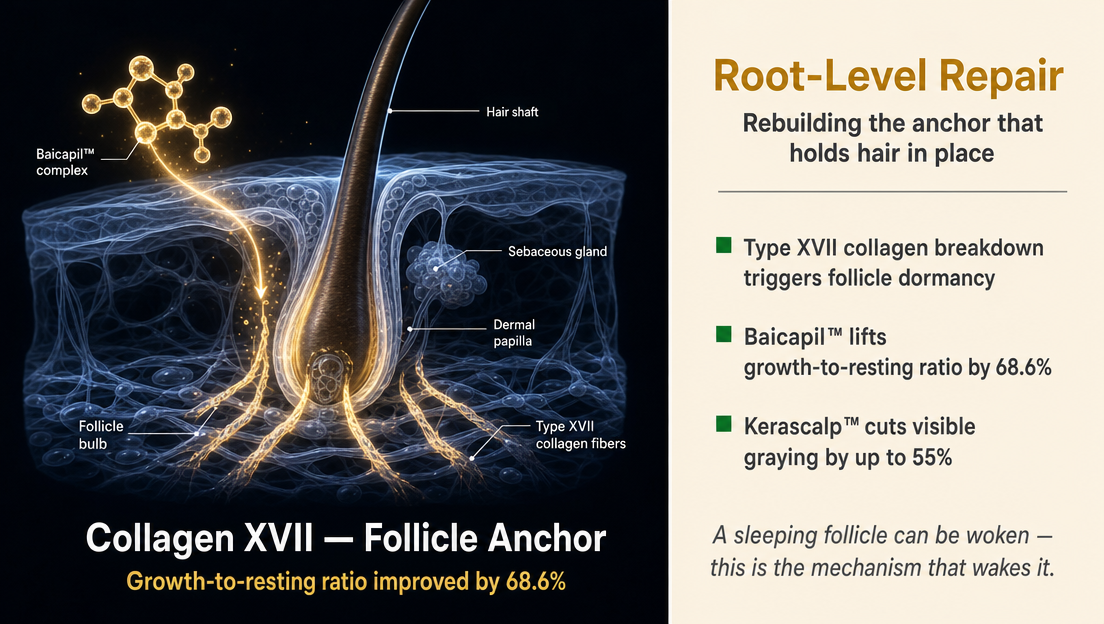
To understand why some treatments work where minoxidil fails, it helps to see what’s really happening under the scalp.
When hair thins with age, the follicles don’t die. They fall dormant. What tips them into that sleep was pinned down in 2016 by researchers publishing in Science: a collagen called Type XVII, the anchor that holds each follicle in place, breaks down over time. The anchor loosens, the follicle shrinks, and the hair it grows turns finer and weaker until it stops. It’s the same collagen decline a woman already sees in her skin, now showing up on her scalp.
This is why surface treatments disappoint. They force growth from the outside without rebuilding the anchor underneath. Minoxidil is the clearest example: the day you stop, the un-anchored follicle gives up again.
The treatments that actually last do the opposite. They work at the root, rebuilding the collagen anchor and sending dormant follicles the signal to wake. A sleeping follicle can be woken. That is the whole game.
“Restore the follicle’s foundation, and the hair that grows back stays,” explains Dr. Laura Schmidt, MD, FRCP. “That’s the difference between treating the cause and renting a result.”
So which ingredients do it? The strongest formulas rely on a handful of patented, clinically studied actives, each targeting a different part of follicle aging.
Follicle reactivation: Baicapil™. A plant-derived complex that sends dormant follicles a biological “wake-up signal,” shifting them from resting back into active growth within weeks. In clinical studies it improved the growth-to-resting ratio by 68.6% and reduced hair loss by over 60% with continued use.
Stem-cell preservation: Kerascalp™. Aging doesn’t only shrink follicles, it wears down the stem cells inside them. Kerascalp™ helps protect that stem-cell environment, with studies showing up to a 55% reduction in visible graying after five months, keeping hair not just fuller but younger-looking.
Deep follicle anchoring: Collagen XVII support. This is the root-cause fix. Rather than coating the surface, Kerascalp™ supports the follicle’s own Collagen XVII, the very anchor identified in the Science research, helping rebuild its hold on the scalp from within. In trials, participants saw visible gains in density and strength while holding onto their natural pigment longer.
“Each of these works on its own,” notes one trichologist on the panel. “But the formulas that combine all three, reactivation, preservation, and anchoring at once, produce the most dramatic improvements in density and strength.”
That combination is exactly what set the five treatments below apart from the other hundred-plus.
How Quickly Do These Treatments Work, And What Can You Realistically Expect?
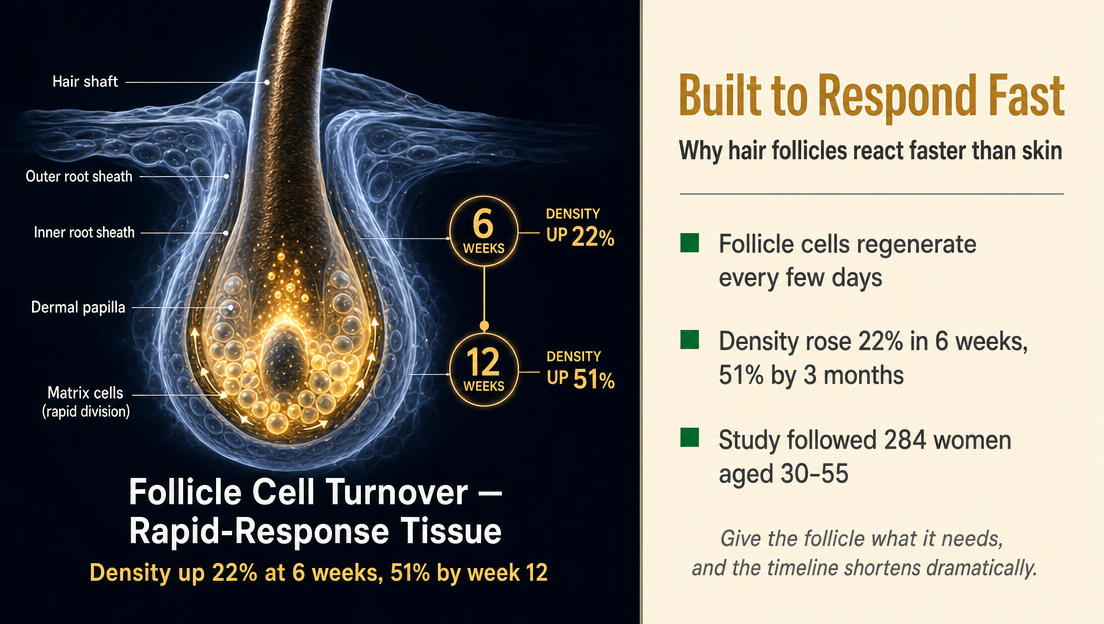
Here’s the encouraging part. Of all the tissues in the body, hair is one of the fastest to respond.
A follicle is a tiny factory that never rests. It produces new cells every few days, while the skin on your face renews only about once a month. That constant activity is what makes thinning hair feel so fragile, but it’s also what lets hair bounce back quickly once the follicle finally gets the right support.
“Hair follicles are among the most active tissues in the body,” explains Marcus Bauer, PhD. “Give them what they need, and you see changes in weeks, not months.”
The clinical data backs him up. In a study of 284 women aged 30 to 55, a follicle-targeting treatment lifted hair density by 22% in just six weeks, climbing to 51% by the three-month mark, measured by imaging of real follicle activity rather than by how the women thought their hair looked. Most noticed the everyday signs first: less hair in the shower drain, a ponytail with more weight to it, a part that no longer showed so much scalp.
That said, speed is no license to believe everything on a label.
The hair-loss aisle is full of bold promises: “regrow all your hair in 30 days,” “a miracle cure for thinning.” Most lean far more on marketing than on science. Trichologists warn that many products carry their active ingredients at concentrations too low to do anything, or harsh ones that only irritate the scalp. Real results come from clinical-grade formulas with proven actives at effective concentrations, used consistently.
When a treatment clears that bar, this is what a woman can reasonably expect to see:
- Visibly thicker-looking hair within 3 to 4 weeks
- Less daily shedding, so coverage looks fuller
- Shinier, healthier-looking texture as follicle health improves
- Stronger strands with less breakage
- A more youthful look, with pigment and vitality holding longer
- A calmer scalp that feels healthy rather than dry or irritated
None of it is instant, and none of it is magic. But unlike surface fixes that simply coat the strand, these treatments work on the follicle itself, which is why the results tend to show quickly and, more importantly, to last.
How To Choose An Effective Hair Loss Treatment
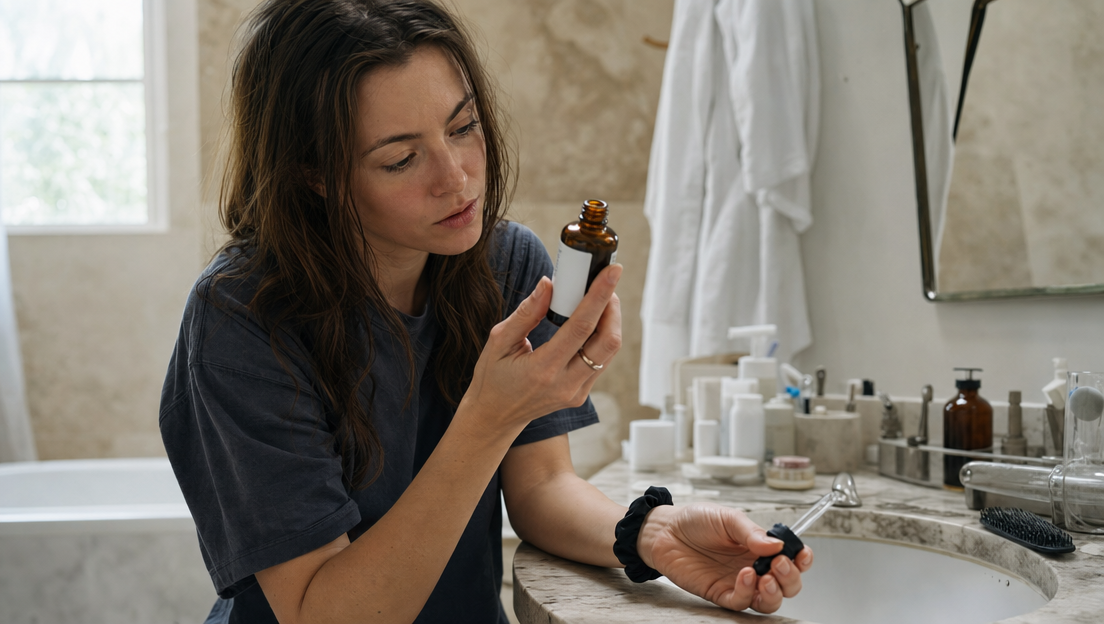
Not every hair treatment deserves your trust, or your money. Experts say a real alternative to minoxidil comes down to three things.
- Patented actives built for the follicle. Ordinary products condition the surface. Real alternatives use clinically studied complexes like Baicapil™, Kerascalp™, or Redensyl™, developed to reawaken dormant follicles and rebuild the Collagen XVII anchor that holds hair to the scalp. “Generic ingredients coat the strand,” says Marcus Bauer, PhD. “Follicle-activating complexes work at the level where growth and collagen are actually controlled.”
- Real clinical proof. Look past the promises for hard numbers: measured gains in density and thickness, studies running at least 12 to 24 weeks, and testing focused on follicle health, not just how hair looks in a photo.
- A formula made for the scalp. A shampoo can’t reach the follicle. The treatments that work are lightweight serums, concentrated enough to penetrate and absorb without residue, without the greasy film, the itch, or the facial hair that send women away from minoxidil in the first place.
The best formulas do two jobs at once: visibly thicker hair now, and a stronger follicle that keeps those results long after, with no lifelong prescription attached.
The 5 Best Minoxidil Alternatives For Women In Europe, For Thicker, Stronger, And More Youthful-Looking Hair
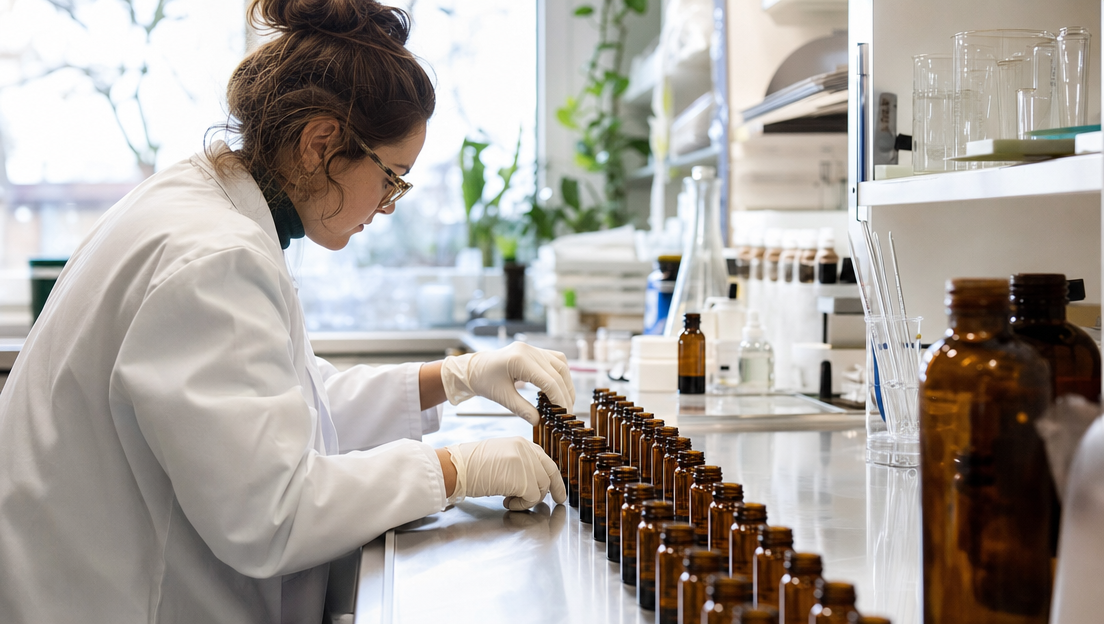
This ranking was built alongside board-certified dermatologists, trichologists, and clinical researchers, with a single goal: to find the treatments that deliver minoxidil’s results without minoxidil’s cost. No dependency. No unwanted facial hair. No daily mess. Each of the 106 treatments was put through the same 12-week evaluation.
The assessment measured active-ingredient potency through independent lab testing, clinical efficacy from peer-reviewed studies, molecular confirmation of follicle stimulation, speed of visible results under controlled conditions, 90-day user outcomes, and the recommendations of practicing dermatologists and trichologists.
Products were purchased anonymously, so that no manufacturer knew of the testing or could influence the results.
Five formulas rose clearly above the rest, each delivering measurable gains in density, thickness, and scalp health, and each a real alternative to a drug most women would rather not depend on.
1. Cellexia – Advanced Collagen Hair Renewal Serum
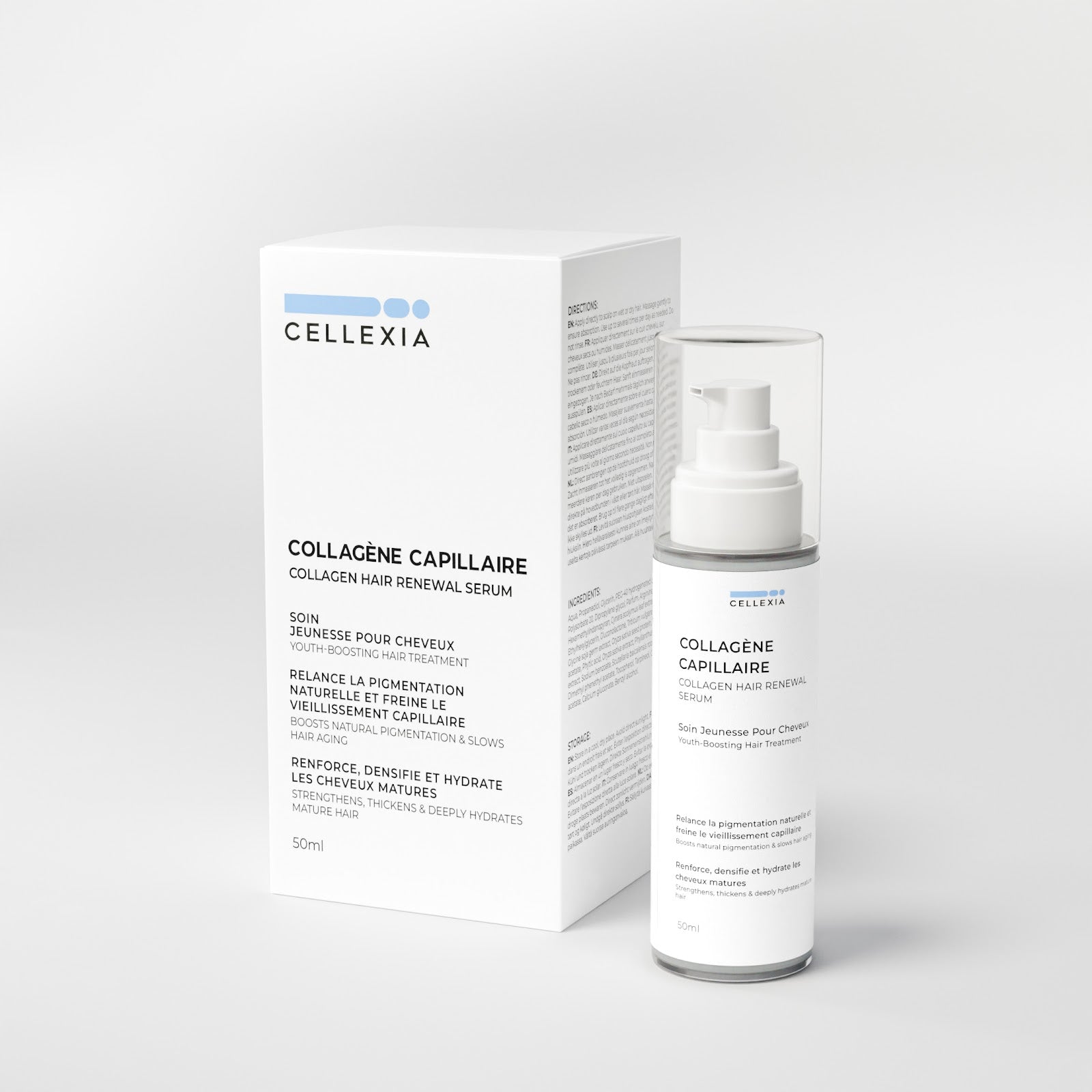
ADVANTAGES:
- Highest follicle-reactivation effect observed in the entire test
- The only formula built specifically for the biology of scalp aging and follicle regeneration
- Concentrated active complex: Baicapil™, Kerascalp™, Kerarice™, Keracyn™
- Works at the root, so gains build on the follicle itself instead of fading the moment you stop
- Gentle, scalp-only action: no unwanted facial or body hair, no greasy residue
- Inspired by Nobel Prize-winning research on cellular aging
- Trichologist-developed and lab-validated formula
DISADVANTAGES:
- Premium price, driven by the high concentration of active ingredients
- Limited availability, sold direct in select quantities due to a complex manufacturing process
OUR VERDICT: Cellexia’s Collagen Hair Renewal Serum delivered the strongest performance of every product tested in our independent lab analysis, especially in reactivating dormant follicles and restoring density. It was the only formula built for the actual biology of scalp aging. Instead of forcing growth from the surface the way minoxidil does, it works at the root to rebuild the collagen anchor, so improvements hold rather than reverse the day you stop.
The concentration of active ingredients sits well above the minimum required for demonstrable follicle-regenerating effects, which explains the higher price, and justifies it. The serum is also inspired by Nobel Prize-winning research on cellular aging, lending scientific weight to its long-term restoration claims.
Cellexia’s serum stands out as the only product in the ranking that delivers both immediate visible improvement and deep follicular regeneration, formulated specifically for the challenges of scalp aging. For a woman who wants visibly thicker, stronger hair without a transplant, without monthly needles, and without chaining herself to a daily drug, it is the clear benchmark in hair-loss treatment innovation.
Instrumental testing showed:
- Hair density: +22% increase in women with thinning hair (highest in the test)
- Follicle activation: +68.6% improvement in anagen-to-telogen ratio after 3 months
- Hair-loss reduction: −60.6% drop in visible shedding within 6 months
- Premature graying: −55% reduction in visible grays over 5 months
- Keratin restoration: +48.1% restoration of UV-degraded hair proteins
INGREDIENT ANALYSIS:
- Baicapil™: reactivates dormant follicles, shifting them from resting to active growth and extending growth cycles by 68.6%
- Kerascalp™: preserves the stem-cell niche and supports Collagen XVII to anchor follicles and slow premature aging
- Kerarice™: shields hair from UV damage and restores damaged keratin proteins, reducing color fading by 14.2%
- Keracyn™: seals the cuticle and prevents protein breakdown, maintaining shine and elasticity
The Cellexia brand was awarded the 2026 European Cosmetic Prize for innovative formulations by an independent jury of 27 dermatologists and cosmetic chemists in Germany (evaluation of 350 brands).
2. Grow Gorgeous – Density Serum Intense
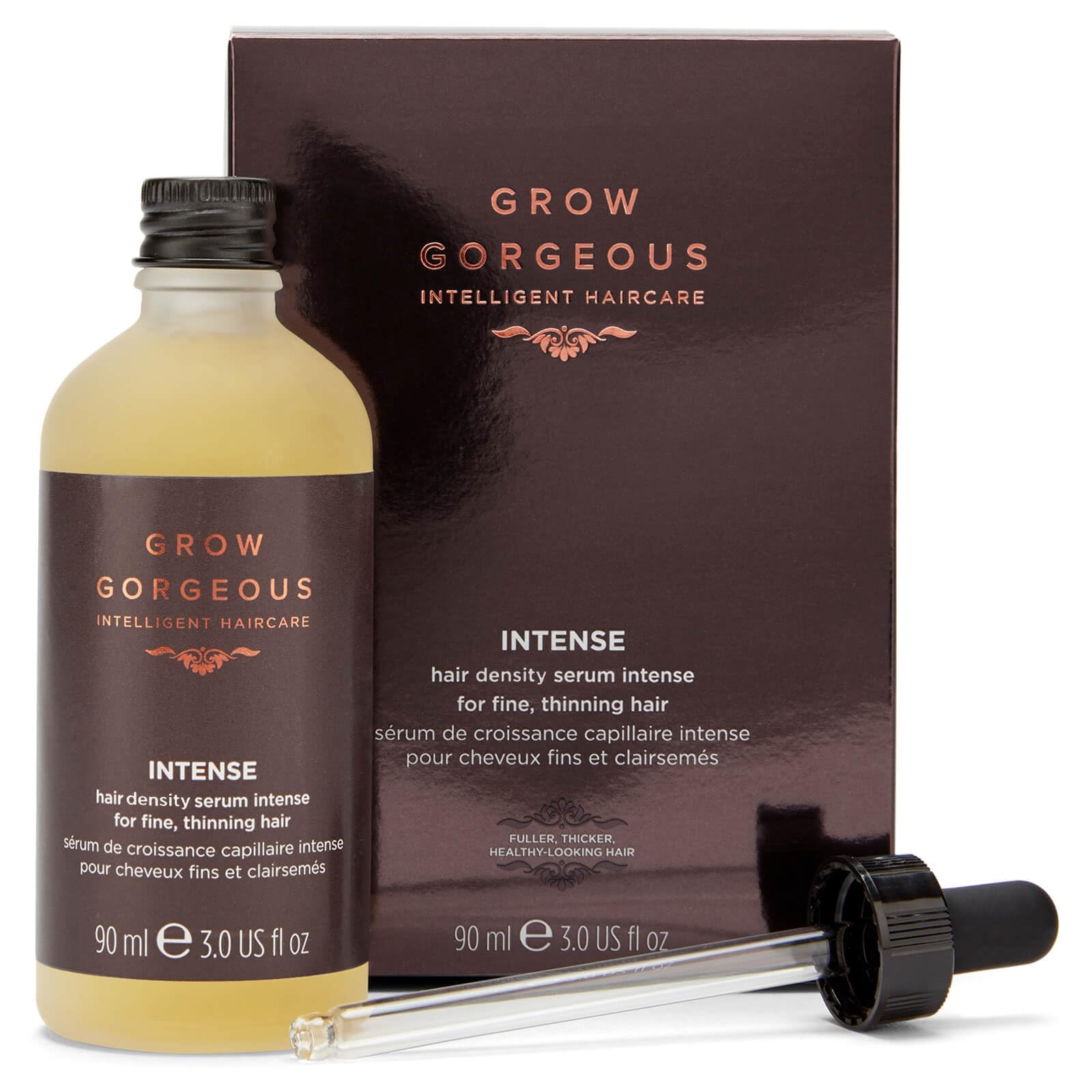
ADVANTAGES:
- Combines caffeine, red clover extract, and hyaluronic acid, clinically shown to increase average strand thickness by up to 13% within 4 weeks
- Vegan, fast-absorbing, no residue or greasiness, with clean, eco-friendly packaging
- Formulated without silicones or parabens, in step with demand for cleaner beauty
- Offers a noticeable boost in volume and hydration in the early weeks
DISADVANTAGES:
- Focused mainly on strand thickness, without the scalp stem-cell regeneration that drives long-term density
- No published evidence for reducing shedding or stimulating new follicle growth
- Omits pigment protection and UV defense
- At around €39, mid-to-high tier for a product with a single primary action
OUR VERDICT: Grow Gorgeous Density Serum Intense offers a smooth, eco-conscious experience and early visible results in thickness. Its ingredients stimulate growth-phase activity and boost hydration, making it a good pick for a quick volume uplift. Like every serum here, it spares women minoxidil’s side effects, but its benefits are supportive and more limited than a full-spectrum, root-level treatment:
Instrumental testing showed:
- Strand thickness: +13% after 4 weeks
- Hydration (scalp dryness index): +9%
- Perceived fullness: +7% in early use
- Density / follicle count: not significantly affected
- Scalp health / pigmentation: no measurable change
INGREDIENT ANALYSIS:
- Caffeine: enhances microcirculation and cell metabolism in the follicle
- Red clover extract: isoflavones that support a longer growth phase
- Hyaluronic acid: immediate hydration, but no direct action on density
In short, a clean, attractive option for rapid volume and hydration. For long-term follicular regeneration, a more comprehensive treatment offers broader support.
3. The Ordinary – Multi-Peptide Serum for Hair Density
ADVANTAGES:
- A well-known peptide complex including Redensyl™, Procapil™, Capixyl™, and Baicapil™, all linked to follicle stimulation and density
- Clean, minimalist formula: lightweight, unscented, silicone-free, easy to layer daily
- Highly accessible price (around $23)
- Widely praised for improving perceived fullness over several weeks
DISADVANTAGES:
- Despite top-tier actives, concentrations run modest next to clinical-grade treatments like Cellexia
- No hydration, scalp antioxidant protection, or anti-aging benefit for the follicle environment
- Lacks newer-generation support actives like Kerascalp™
- Narrow action: mostly follicle stimulation, without long-term structural or pigment support
OUR VERDICT: The Ordinary’s Multi-Peptide Serum delivers an affordable, peptide-driven formula aimed at early-stage density. Its Redensyl™, Procapil™, and Capixyl™ target real pathways like follicle reactivation and anchoring strength. But the overall impact is bounded by conservative concentrations and the absence of complementary actives. Testing shows solid, but not category-leading, results:
Instrumental testing showed:
- Hair density: +8% after 60 days (vs +22% for our test winner)
- Perceived strand thickness: +11.2% in 4 weeks
- New follicle activation (Redensyl marker): +9% in 10 days
- Hydration & scalp protection: no measurable improvement
INGREDIENT ANALYSIS:
- Redensyl™: reactivates bulge-region stem cells and stimulates keratinocytes
- Procapil™: strengthens the anchoring structure via biotinylated peptides and vascular support
- Capixyl™ & Baicapil™: encourage healthier follicle behavior across the growth cycle
A cost-effective entry into thinning-hair care. Strong on paper, but the low dosage and narrow scope limit results next to a full-spectrum formula like our winner, which reaches up to +22% density through synergistic, multi-pathway action.
4. Coco & Eve – Boost Therapy Tripeptide Hair Density Serum
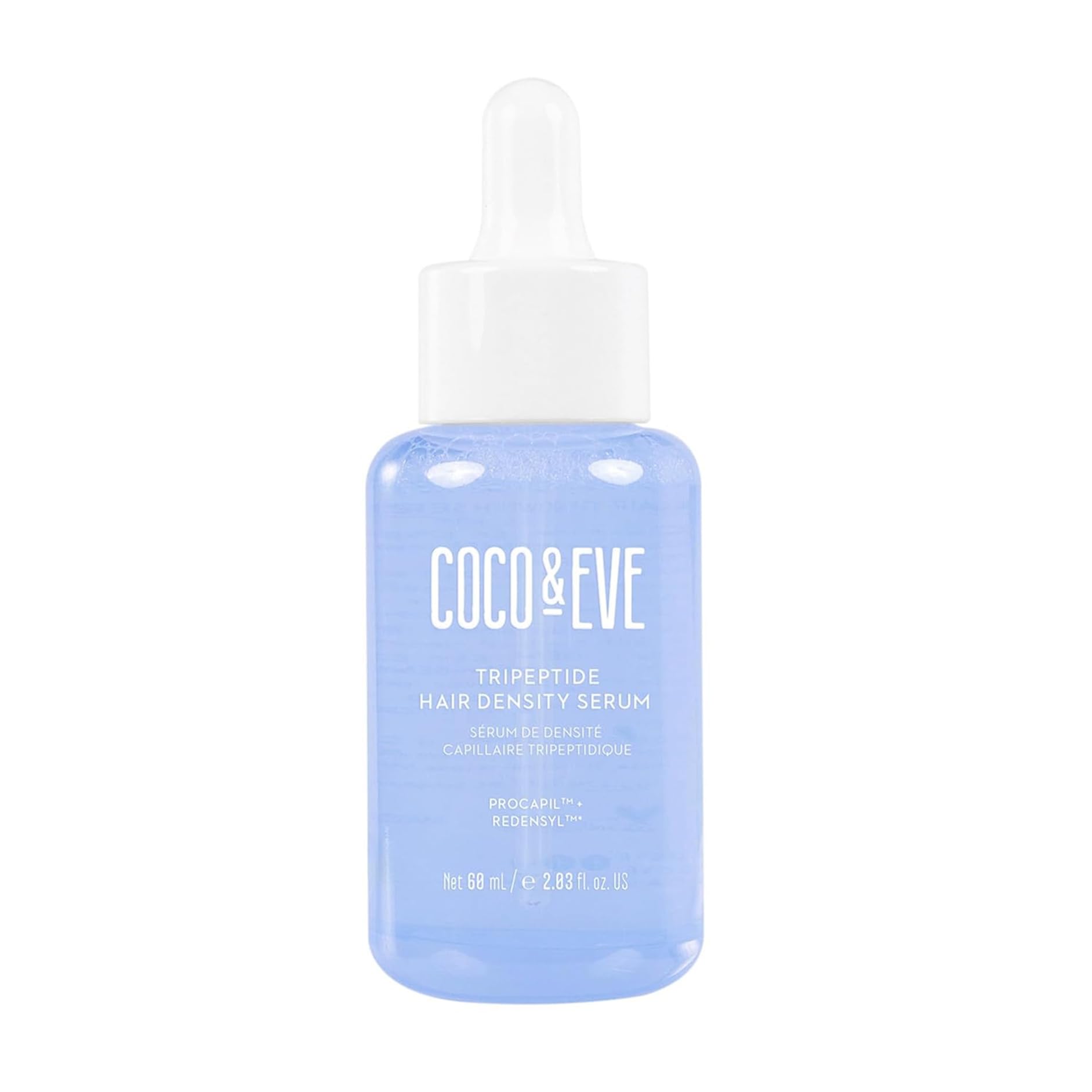
ADVANTAGES:
- Contains Redensyl™ and Procapil™, two well-studied peptide complexes for follicle vitality and anchoring
- Formulated with caffeine and pre/probiotics that may support microcirculation and rebalance the scalp microbiome
- Lightweight, fragrance-free, suitable for daily use and sensitive scalps
- Clean, vegan formulation for ingredient-conscious shoppers
DISADVANTAGES:
- Peptide concentrations appear lower than in more intensive treatments, which may limit long-term efficacy
- No cuticle reinforcement, fiber hydration, or anti-greying protection
- Results take several weeks, and cosmetic benefits stay subtle
- Narrow mechanism: stimulation and anchoring, rather than broader follicular rejuvenation
OUR VERDICT: Coco & Eve’s Boost Therapy Serum is a well-positioned scalp treatment focused on stimulating and strengthening follicles. Its Redensyl™, Procapil™, and caffeine target the biological triggers of hair loss, while the pre/probiotic blend supports a healthier scalp. That said, its modest concentration and limited cosmetic payoff place it behind more advanced, multi-active formulas. It suits a preventative or maintenance routine better than a standalone densifying solution.
INGREDIENT ANALYSIS:
- Redensyl™ & Procapil™: stimulate follicle activity and may ease inflammation around the bulb
- Caffeine: supports short-term microcirculation; effects are transient and need consistent use
- Pre/probiotics: help maintain microbiome balance, though the hair-care evidence is still emerging
A clean, reliable formula, especially for early-stage weakening or for reinforcing existing density with minimal irritation.
5. Briogeo – Destined for Density MegaStrength+ Serum
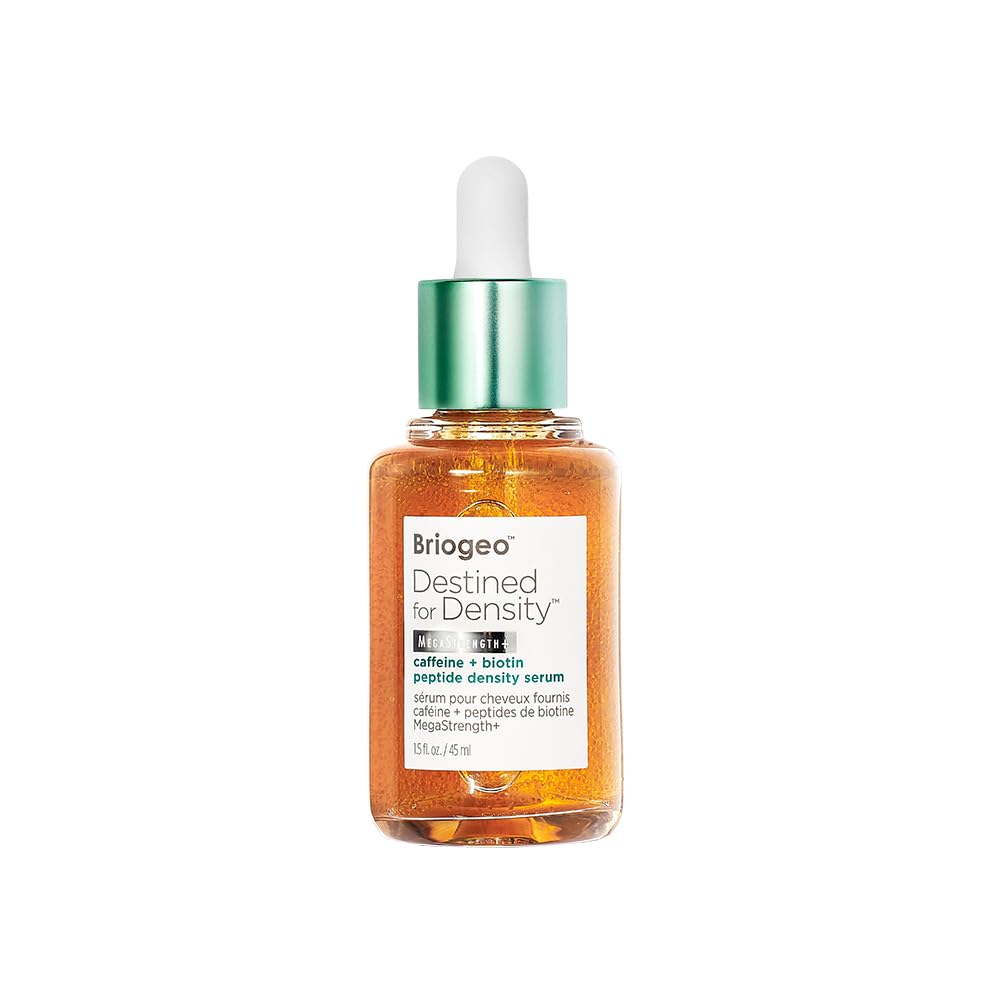
ADVANTAGES:
- A proprietary “Density Boosting Complex” of biotin, caffeine, niacinamide, and ginger root
- Clean, fast-absorbing, salon-grade formula, free from sulfates, silicones, parabens, and mineral oils
- Multi-pathway approach: nutrition, circulation, and strengthening at once
- Vegan, cruelty-free, without synthetic dyes or fragrance
DISADVANTAGES:
- Visible density needs a longer commitment (12 to 16 weeks) than quicker-acting treatments
- No published evidence for pigment preservation or UV protection
- Premium price (around €49) reflects its niche status more than immediate results
- Little immediate payoff: no shine boost or scalp-moisture claim on first use
OUR VERDICT: Briogeo MegaStrength+ Serum is a solid long-term investment in fuller, stronger hair. Its blend of nutrients and vitamins supports deep follicular vitality and noticeably reduces shedding over time. Independent trial data confirms:
Instrumental testing showed:
- Hair thickness: 3× average improvement by Week 16
- Shedding reduction: 95% of participants reported less fall-out
- Scalp comfort and resilience: improved in 82% of users
- Density (hair/cm²): modest gains (+10 to 12%) with consistent use
- Immediate shine or moisture: minimal
INGREDIENT ANALYSIS:
- Biotin & niacinamide: cofactors for keratin synthesis and scalp health
- Caffeine & ginger root: support follicle blood flow and ease inflammation
- Multi-vitamin complex: supports the structural integrity of the hair fiber
A clean, science-backed choice for a woman committed to longer-term restructuring. Ideal for shedding reduction and follicle nourishment, less so for anyone seeking instant shine or pigment enhancement.
Top 5 At A Glance
Highest follicle reactivation and the clear test winner: Advanced Collagen Hair Renewal Serum, Cellexia (#1). The only formula built specifically for the biology of scalp aging, pairing dormant-follicle reactivation with deep collagen anchoring. Hair density rose 22% and follicle activity climbed 68.6%, the highest scores in the test, alongside a 60.6% drop in visible shedding. Sold direct from the brand only, in limited quantities.
Best for a quick volume boost: Density Serum Intense, Grow Gorgeous (#2). A clean, vegan formula with caffeine and red clover that thickened individual strands by 13% in four weeks. Fast and pleasant to use, but it does little for shedding or new follicle growth. Widely available.
Best budget pick: Multi-Peptide Serum for Hair Density, The Ordinary (#3). A strong peptide lineup of Redensyl, Procapil and Capixyl at an accessible price, lifting density 8% over sixty days. Solid on paper, though the doses run modest next to clinical-grade formulas. Widely available.
Best for early-stage maintenance: Boost Therapy Tripeptide Serum, Coco & Eve (#4). A gentle peptide-and-probiotic blend that supports follicle health and a balanced scalp. Better suited to prevention than to standalone densifying, with a subtle cosmetic payoff. Widely available.
Best for long-term shedding reduction: Destined for Density MegaStrength+ Serum, Briogeo (#5). A multi-vitamin complex that cut fall-out for 95% of users and firmed the scalp over time, though full density gains ask for twelve to sixteen weeks of patience. Widely available.
Sources
- Hair follicle aging is driven by transepidermal elimination of stem cells via COL17A1 proteolysis – Matsumura H, Mohri Y, Binh NT, et al. (2016), Science, 351(6273):aad4395
- Rosmarinus officinalis (rosemary) oil versus minoxidil 2% for the treatment of androgenetic alopecia: a randomized comparative trial – Panahi Y, Taghizadeh M, Marzony ET, Sahebkar A (2015), Skinmed, 13(1):15-21
- A randomized evaluator blinded study of effect of microneedling in androgenetic alopecia: a pilot study – Dhurat R, Sukesh M, Avhad G, Dandale A, Pal A, Pund P (2013), International Journal of Trichology, 5(1):6-11
- A randomized, double-blind, placebo-controlled trial to determine the effectiveness of botanically derived inhibitors of 5-alpha-reductase in the treatment of androgenetic alopecia – Prager N, Bickett K, French N, Marcovici G (2002), Journal of Alternative and Complementary Medicine, 8(2):143-152
- Efficacy and safety of a low-level laser device in the treatment of male and female pattern hair loss: a multicenter, randomized, sham device-controlled, double-blind study – Jimenez JJ, Wikramanayake TC, Bergfeld W, et al. (2014), American Journal of Clinical Dermatology, 15(2):115-127
- Oral minoxidil treatment for hair loss: A review of efficacy and safety – Randolph M, Tosti A (2021), Journal of the American Academy of Dermatology, 84(3):737-746
- Professor Charlotte Weber, MD – Chair of Dermatology, board-certified dermatologist with 25 years specialising in ageing skin. Principal investigator on 47 clinical trials measuring anti-ageing product efficacy; led the independent panel for this evaluation.
- Dr. Marcus Bauer, PhD – Director of Dermatological Research, dermatological research scientist with 26 years of professional experience. Developed laboratory methods for measuring collagen production in ageing skin and conducted the Phase 1 ingredient audit for this evaluation.
- Dr. Laura Schmidt, MD, FRCP – Consultant dermatologist with a specialist practice in non-invasive skin rejuvenation. Performed over 15,000 anti-ageing treatments and supervised the clinical trial across multiple UK testing sites.